
Who was the safe captain pick in the preview?
Nat Sciver-Brunt (ENG-W all-rounder) was the safe captain pick, with Ashleigh Gardner (AUS-W all-rounder) as the safe vice-captain, per the Sportsdunia match preview.
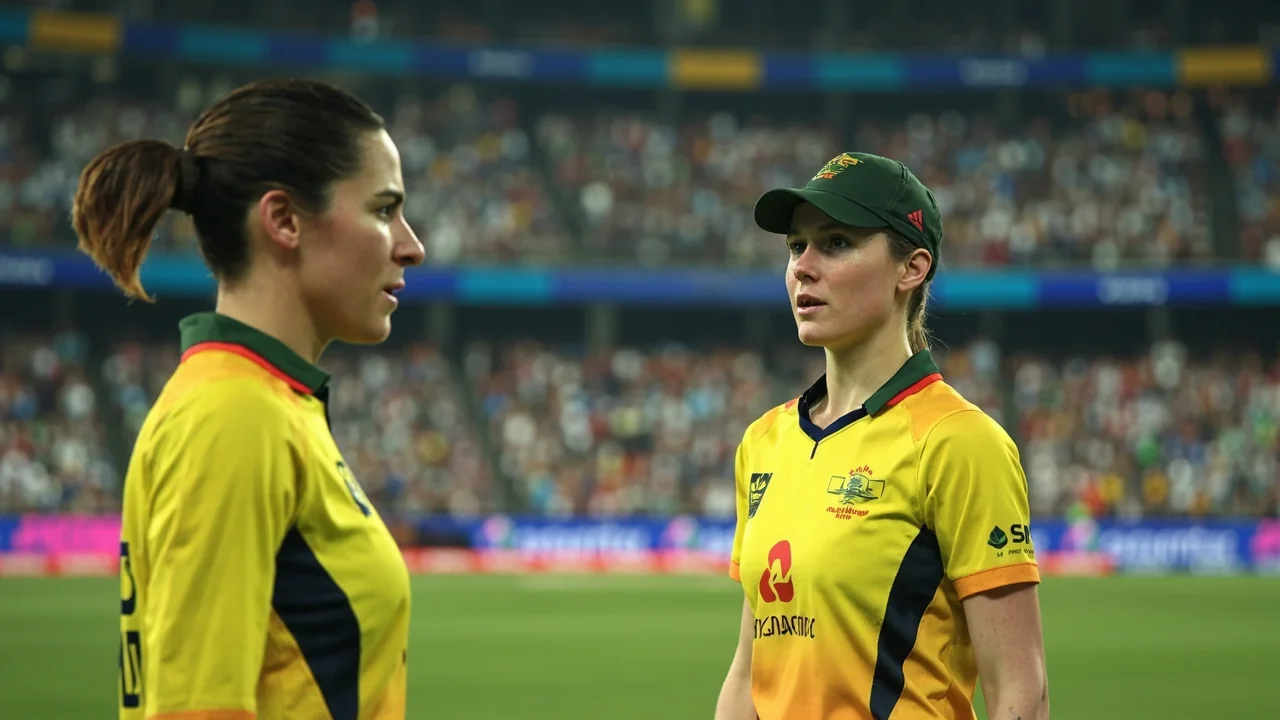
Two unbeaten sides met at Lord’s on 5 July 2026 to decide the ICC Women’s T20 World Cup 2026. Australia chased a seventh title, England chased echoes of their 2009 win. Below covers the My11Circle fantasy XI for the final, the captaincy options, the Lord’s pitch read and the matchups that decided selection.
· Predict11 News Desk · Source: Sportsdunia match preview
England Women met Australia Women at Lord’s Cricket Ground, London on 5 July 2026 with a 8:00 PM IST start, closing a tournament in which both sides arrived at the final without a defeat. Australia carried a chase for a seventh Women’s T20 World Cup title. England carried the memory of their 2009 Lord’s win and the weight of a home crowd that wanted a repeat. The reading for fantasy users heading into a single-match slate was straightforward: pick from the side most likely to absorb pressure and produce multi-department returns rather than chase a single boundary burst.
The source preview tipped Australia as slight favourites because of their ICC final record and the batting-bowling depth in their playing eleven. England’s unbeaten run and home support were the counter-arguments. Neither side had been seriously tested by a chasing innings under floodlights in the knockouts, so the read on the Lord’s surface, rather than the form ledger, was the more useful filter for fantasy selection.
The Sportsdunia preview named Nat Sciver-Brunt as the safe captain pick and Ashleigh Gardner as the safe vice-captain. Both are all-rounders, which is a deliberate choice: in a single-match slate, an all-rounder can collect from batting, bowling and fielding in the same fixture, and the multiplier applies to whichever column the player’s points land in. Sciver-Brunt’s batting role at number three and her seam-bowling role through the middle overs give her a wide scoring surface. Gardner’s off-spin gives Australia a wicket-taking option against left-handers and her batting power at six or seven gives a finishing kick.
Reading the pick as a portfolio decision rather than a single player call helps. A captain-vice-captain pairing that collects from two different departments and two different sides spreads the risk of a single bad matchup ruining the night. If the pitch assisted spin and Australia bowled first, Gardner’s points climbed. If England chased and the ball moved early, Sciver-Brunt’s seam overs climbed. The pairing is calibrated for the range of plausible Lord’s conditions rather than for one specific scoreline.
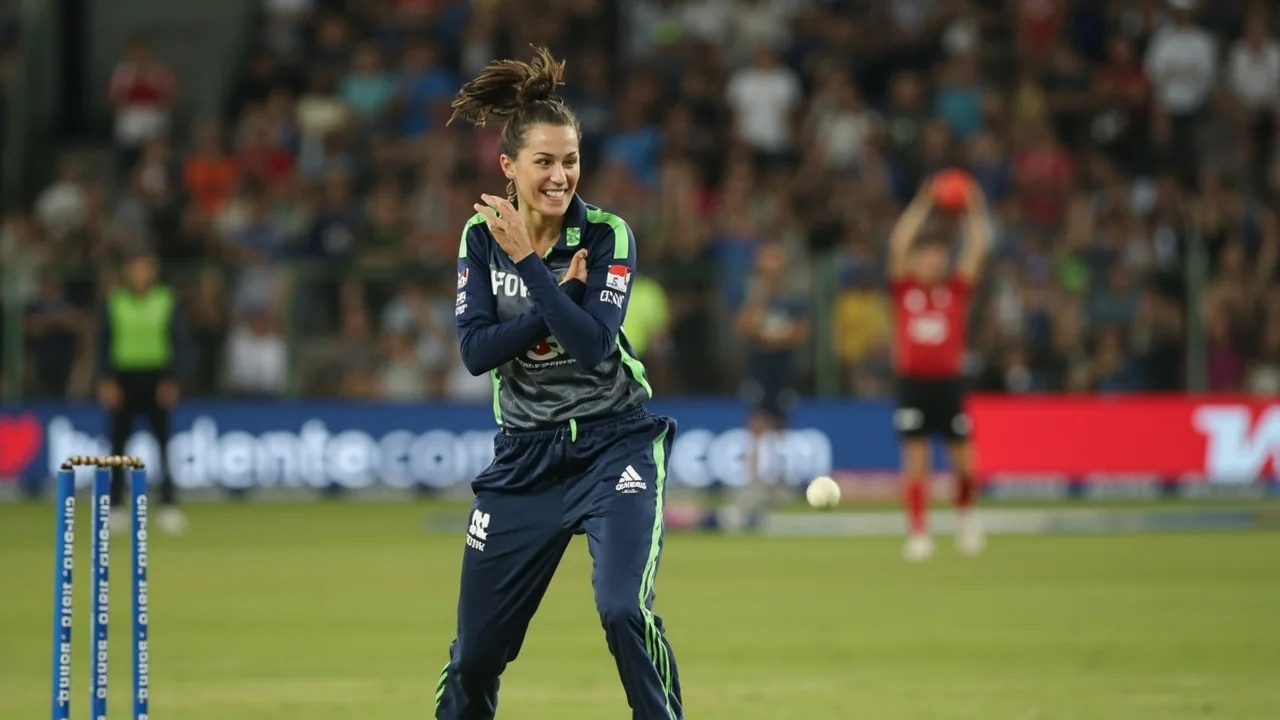
The preview’s risky option was Beth Mooney as captain and Danni Wyatt-Hodge as vice-captain. Mooney’s role is wicketkeeper-batter at the top of the Australian order, where a fast start can lift her fantasy return even when the innings ends cheaply. Wyatt-Hodge opens for England and brings the boundary threat against the new ball. The risky tag is honest: both picks depend on early batting points rather than all-round contributions, so a slow powerplay punishes them.
The honest read for multi-entry contests is that a risky captain pair belongs in one or two entries, not three. If the safe pair covers the obvious base case, the risky pair covers the specific scenario where the ball skids on, early wickets fall, and the chasing side’s openers carry the scoreboard. Hedging in this way protects the bankroll without diluting the safer entries. Picking the risky pair across every team is how contests turn into lottery tickets.
The Sportsdunia preview published a full eleven that the fantasy desk could lift directly into a My11Circle team sheet. The shape is three batters, four all-rounders, three bowlers, plus a wicketkeeper, which is the standard 100-credit build for a single-match T20 slate.
| Role | Player | Side |
|---|---|---|
| Wicketkeeper | Beth Mooney | AUS-W |
| Batter | Danni Wyatt-Hodge | ENG-W |
| Batter | Ellyse Perry | AUS-W |
| All-rounder (C) | Nat Sciver-Brunt | ENG-W |
| All-rounder (VC) | Ashleigh Gardner | AUS-W |
| All-rounder | Georgia Wareham | AUS-W |
| All-rounder | Freya Kemp | ENG-W |
| All-rounder | Charlotte Dean | ENG-W |
| Bowler | Sophie Ecclestone | ENG-W |
| Bowler | Sophie Molineux | AUS-W |
| Bowler | Lauren Bell | ENG-W |
The seven-five England-Australia split (six England, five Australia) reflects the preview’s tilt toward Australia but locks the English all-rounders who might dominate the middle overs. The third-bowler slot for Lauren Bell, rather than a third frontline specialist, is also a Lord’s decision: a pitch offering seam movement makes a frontline seamer worth one slot, and Bell’s role through the powerplay is the trigger.
The preview explicitly named Linsey Smith and Nicola Carey as players to avoid for the final, both priced at 9 credits. The price tag is the first tell: 9 credits is the tier where a player is supposed to be a value differential, but a low strike rate or a non-strike role on the night can hollow out the return. Smith’s left-arm spin reads well on paper against Australia’s right-handers, but her finishing role is conditional on England taking early wickets. Carey’s seam-bowling role in the Australian XI is more useful against a tail than against a top-order built to handle pace.
For Predict11 users filling the lower-credit slots, the read is straightforward: a 9-credit player who needs a specific scenario to deliver is a poor captain pick and a poor vice-captain pick, but a perfectly fine bench option. Drop them into the squad only when the rest of the eleven is locked.
The preview described Lord’s as a balanced surface that offered free scoring for batters who settle, early seam movement with the new ball, and a clear spin-bowling role in the middle overs. That is a classic English summer T20 pitch, and it shapes the fantasy read in three concrete ways. First, openers need at least ten balls to settle, so captaincy on the openers is risky and captaincy on the number-three batter is safer. Second, the seam-bowling all-rounders get a fantasy boost in the powerplay because early wickets pay double in most scoring systems. Third, the spinners carry the middle overs, which is where Gardner and Ecclestone typically outscore their credit cost.
Weather on the night was dry with some cloud cover and no rain expected, so the toss mattered less than the pitch. The reading that helps fantasy users most is that the toss does not change the long-form scorecard shape: a 160-plus first innings is plausible, a 150-plus chase is plausible, and the difference between the two outcomes lives in the powerplay, not in the death overs.
The preview highlighted four matchups that decide the result on most reasonable scorelines, and each one has a fantasy angle as well as a cricket angle. Reading them in order gives fantasy users a way to check their own XI against the most plausible points-scoring lanes of the night.
None of these matchups are settled in advance, and that is exactly the point. Each one is a credible source of fantasy points for the players involved, which is why the preview put them on the page. Building an XI that overlaps with two or three of these lanes is a reasonable proxy for a high-ceiling team.
The preview’s Australia-favourite read was based on three concrete factors. First, the ICC final record: Australia have won the women’s T20 World Cup six times, more than any other side, and their previous knockout appearances have usually featured a controlled powerplay and a late-innings acceleration. Second, the batting-bowling depth: the chosen XI had matchup options for every phase of the innings, including a left-arm spinner (Molineux) and a leg-spinner (Wareham) who can operate in tandem through the middle overs. Third, the all-rounder base: Gardner and Wareham cover the seam-spin roles that Lord’s was likely to reward.
England’s counter-argument, again from the preview, was the unbeaten run and home support. The honest read for fantasy users is that “slight favourite” is a cricket framing, not a fantasy framing. A slight favourite still loses more than 40 percent of finals, and a fantasy XI built around the favourite’s depth picks (Gardner, Wareham, Mooney, Molineux) is still an XI that depends on Australia’s batting converting in the powerplay. The English all-rounders are not punts; they are the insurance.
The simplest frame for the night, before any ball is bowled, is to think of the XI as a portfolio of three roles. Anchor role: Sciver-Brunt, Ecclestone, Molineux. These three are the multi-department players whose ceiling is the highest in the squad. Powerplay role: Wyatt-Hodge, Mooney, Bell. These three are the boundary threats and the seam-up wicket-takers who earn their credit cost on the first six overs. Finishing role: Perry, Gardner, Wareham, Kemp, Dean. These five are the death-overs contributors and the catch-point earners who lift a score above 160 or defend one against a chasing side.
Splitting the XI this way keeps the captaincy decision simple. The safe captain (Sciver-Brunt) sits in the anchor role. The safe vice-captain (Gardner) sits in the finishing role. The risky captain (Mooney) sits in the powerplay role, where her ceiling is highest and her floor is lowest. The structure survives a wide range of plausible scorelines without forcing a single player to be the hero.
For readers who keep a private league on Predict11 alongside their main entry, the same eleven with a vice-captain swap is a useful test: if swapping the VC between Gardner and Wyatt-Hodge swings your expected points by less than ten, the XI is well-balanced. If the swing is bigger than ten, the captaincy decision is leaning on a single lane and a more conservative pairing may serve a smaller contest better.
The preview supplies three useful inputs for a final-day XI: a suggested playing eleven, two captaincy pairs, and a pitch read. It does not supply a confirmed playing XI for either side, because squads were not officially announced at the time of writing. It does not supply injury updates, weather changes, or any post-publication news that may have arrived between the preview date and the first ball. For all of those, the right next move is the official team sheet at the toss rather than a second preview.
Fantasy entries locked against this XI are therefore conditional on the toss-time playing XIs matching the preview. If either side rests a bowler, changes the batting order, or names an impact-player substitute, the XI above needs a same-day revision before the first ball. Predict11 users planning entries ahead of the toss should set a calendar reminder for the toss announcement and re-check the XI at that point rather than locking it on the preview alone.
The single concrete development worth tracking once the match is played is the captain-multiplier outcome. If the safe pair (Sciver-Brunt + Gardner) returns a higher net fantasy score than the risky pair (Mooney + Wyatt-Hodge), the all-rounder anchor logic is reinforced for the next ICC knockout. If the risky pair wins, the openers’s powerplay logic is the better template. Either result is informative, and the right place to record it is a private league note rather than a public ranking.
Nat Sciver-Brunt (ENG-W all-rounder) was the safe captain pick, with Ashleigh Gardner (AUS-W all-rounder) as the safe vice-captain, per the Sportsdunia match preview.
Beth Mooney (AUS-W wicketkeeper-batter) was the risky captain pick, with Danni Wyatt-Hodge (ENG-W opener) as the risky vice-captain.
WK Beth Mooney; batters Danni Wyatt-Hodge and Ellyse Perry; all-rounders Georgia Wareham, Nat Sciver-Brunt (C), Ashleigh Gardner (VC), Freya Kemp, Charlotte Dean; bowlers Sophie Ecclestone, Sophie Molineux, Lauren Bell.
Linsey Smith (9 credits) and Nicola Carey (9 credits) were named as players to avoid for the final.
A balanced surface with free scoring for batters who settle, early seam movement with the new ball, and a clear spin-bowling role in the middle overs. Weather was dry with cloud cover and no rain expected.
The preview cited Australia’s ICC final record (six Women’s T20 World Cup titles), their batting-bowling depth, and the all-rounder base in their playing eleven, despite England’s unbeaten run and home support.
Single-match captaincy calls are most useful when read against a multi-format fantasy cricket brief. For Predict11 readers building a season-long template, the captain multiplier logic from this final is one data point inside the broader fantasy cricket frame.
Use the captain multiplier logic from the final as one input for the next ICC women’s T20 fixture on your fantasy shortlist.