
What did the Houlihan Lokey report say the IPL is worth?
According to the Gulf News summary of the Houlihan Lokey report dated 29 July 2026, the IPL’s brand value is estimated at $20.6 billion, a 10.3 percent rise over the previous year.
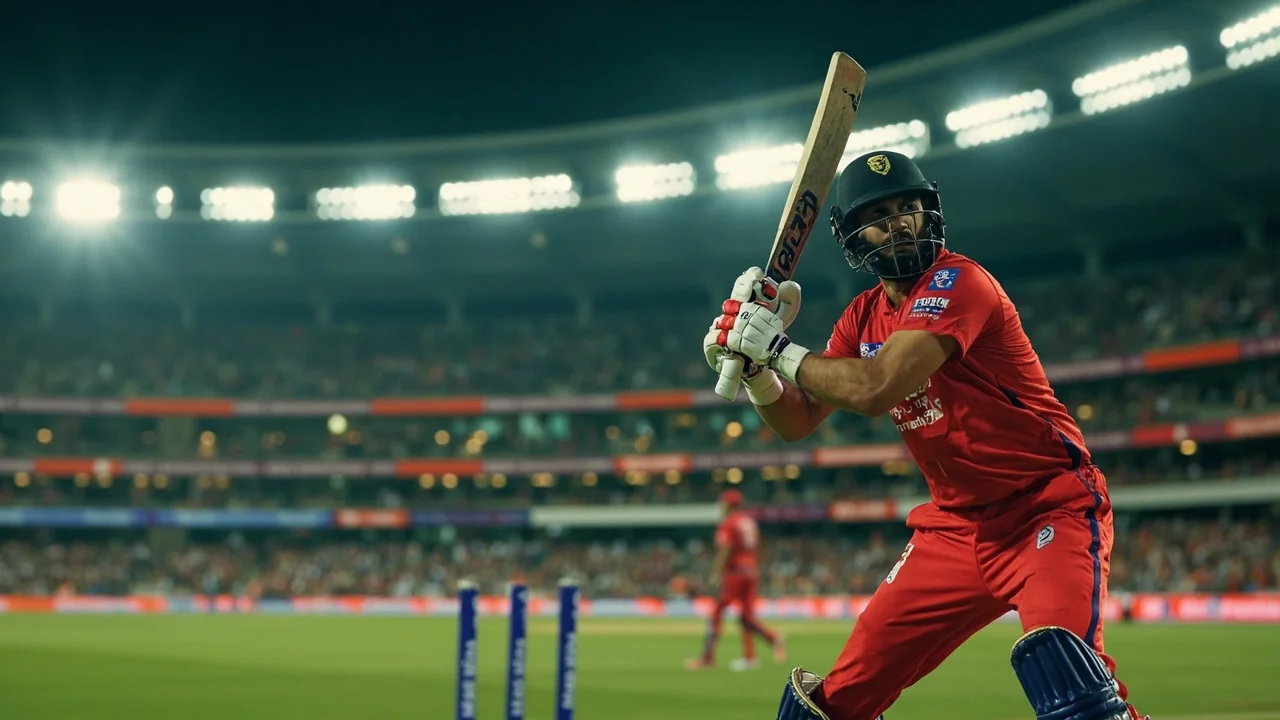
A Houlihan Lokey report dated 29 July 2026 puts the Indian Premier League at an estimated $20.6 billion in brand value, a 10.3 percent rise over the previous year, and ranks the tournament second only to the NFL on a per-match basis. Royal Challengers Bengaluru hold the top franchise slot at $312 million.
· Predict11 News Desk · Source: Gulf News report on the Houlihan Lokey valuation, 30 July 2026
The headline from the Houlihan Lokey report is straightforward: the Indian Premier League’s brand value stands at an estimated $20.6 billion, a 10.3 percent rise over the previous year. What gives the number global weight is the second metric in the same report. On a per-match basis only the National Football League ranks ahead of the IPL, which means the league’s revenue intensity per fixture has climbed past every other cricket format and past almost every football competition outside the United States.
Houlihan Lokey’s Harsh Talikoti framed the shift in a single sentence in the Gulf News write-up: “Cricket’s evolution into a globally owned, institutionally backed asset class has accelerated further in 2026.” That phrasing matters because valuation reports are usually written for deal-makers rather than for cricket readers, and the institutional language tracks how the IPL’s franchise market has actually moved over the last two years. Ownership changes now read like balance-sheet events.
For readers who follow the league rather than the league’s sponsors, the per-match cut is the cleaner comparison. The NFL plays a 17-game regular season per team in front of packed stadiums and the largest national broadcast contracts in North America. The IPL plays a home-and-away round of 14 league games per franchise, a four-game playoff window, and a near-saturation broadcast and streaming reach across the Indian sub-continent. The report’s underlying point is that the IPL is no longer being valued against other cricket leagues in 2026; it is being measured against the NFL, the NBA, and the Premier League.
Royal Challengers Bengaluru retained their position as the league’s most valuable franchise at $312 million. The figure is a franchise valuation, not the team’s turnover, and it includes brand, roster and equity dimensions rather than a single trading-day price. RCB’s number is anchored by two things that the franchise control directly: a long and unbroken top-order narrative built around Virat Kohli, and ownership by a consortium that now includes Blackstone following the deal reported earlier in 2026.
The Blackstone-led acquisition closed at nearly $1.8 billion, the most expensive franchise transaction in IPL history. To put that figure in proportion: $1.8 billion for one of ten franchises inside a $20.6 billion brand produces a franchise-level price that clears seven percent of the whole league’s value in a single transaction. The mark matters for two audiences. For prospective owners it signals that the franchise ceiling has moved upward; for fantasy readers it explains why RCB roster decisions are now being read as capital-events rather than as sports decisions.
RCB have also won the last two IPL titles, which compounds the valuation signal. On-field success, brand association with Kohli, and institutional ownership have aligned at the same time, which is rare across any sports market. The Houlihan Lokey report does not separate the on-field premium from the institutional premium in dollar terms, but the gap between RCB’s $312 million and the next franchise in the table is where that compound effect typically shows up.
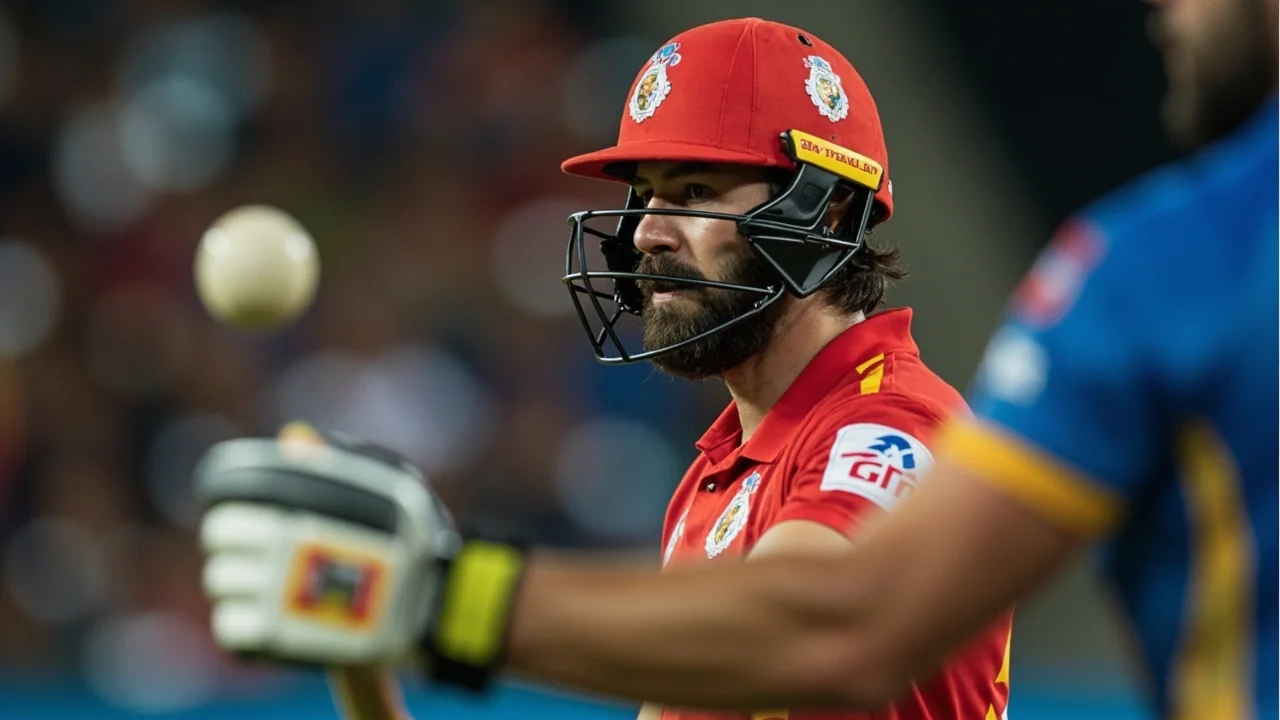
The second-biggest ownership story in the Gulf News write-up is the Rajasthan Royals sale, valued at $1.65 billion. The new ownership structure brings Lakshmi N. Mittal and family into the cap table alongside Adar Poonawalla. The Mittal family’s industrial reach and the Poonawalla stake’s continuity give the franchise a sponsor network that few other IPL sides can match, which is typically how valuations run ahead of sporting performance in a league where brand gates tournament economics.
What changes for the Royals is less about the playing eleven and more about the off-field operation: stadium upgrades, international touring windows, and a media-rights bidding posture that favours franchises with stable, long-horizon capital behind them. The $1.65 billion price point also sets the next reference line for any further franchise sales in this window, since the second-largest transaction always anchors the third.
The same report carries a softer number that fantasy readers should not skip past. Last season, IPL television ratings fell 18 percent and average viewership dropped 26 percent. The decline was attributed in part to a ban on online betting sites that normally drive a chunk of high-frequency viewing, and in part to “an overdose of Twenty20 cricket” across calendar windows that now stretch almost year-round.
The rating dip does not contradict the brand valuation. It does, however, recalibrate the way to read the 10.3 percent year-on-year jump. A league whose franchise prices keep rising while viewership slips is being valued primarily on commercial rights, ownership scarcity, and the institutional balance sheets behind each franchise, rather than on linear broadcast reach alone. That shift changes what the next media-rights cycle will look like, and it changes which teams benefit most from sponsorship inventory.
For fantasy users, the rating number is also a clean reminder that on-field success and franchise value are no longer moving in lockstep. Predict11 readers building teams around the highest-valuation franchises do not automatically pick the highest-scoring fantasy captain. The game within the game is to read through the commercial lens the Houlihan Lokey report now applies to every team.
The Houlihan Lokey report ties cleanly to the work that the IPL Teams reference desk does week to week. Each of the ten franchises now sits inside a league whose institutional pricing has crossed $20 billion, and each franchise transaction is being read by global capital rather than by domestic broadcasters. The practical consequence is that any squad decision, any captaincy shift, any impact-player rotation that happens on the field carries an off-field price tag the league did not have two seasons ago.
For readers who follow the IPL Teams reference, three angles deserve attention over the next fixture window. First, watch whether RCB’s $312 million franchise value holds against any softening on-field performance; the price usually lags the form, but the form now bears harder on the price than it did at the start of the decade. Second, monitor the Royals’ commercial moves around their new ownership; the same capital that paid $1.65 billion for the franchise will be looking to amortise that spend across broadcast inventory, jersey sponsorships, and stadium revenue. Third, treat any subsequent franchise transaction that surfaces between now and the end of 2026 as the next data point for the league’s underlying capital intensity rather than as a one-off sale.
Readers who want a deeper read on each squad’s fantasy setup will find the IPL Teams reference handles each franchise individually, including captaincy pairs, role rotations, and the venue behaviour that the upcoming season will test. The Houlihan Lokey numbers above give that work a backdrop it has not had before; the per-match intensity now ranks against the NFL, and that fact travels into every match-day conversation.
The single most verifiable update on this story is the next official disclosure from the Houlihan Lokey side, whether it is a press note, a full report PDF, or a follow-up valuation against the next broadcast-rights cycle. The Gulf News article cites a $20.6 billion figure with a 10.3 percent annual rise, both of which can be checked against the original Houlihan Lokey publication once it lands in a publicly accessible file.
The second verifiable update is the confirmation trail for the RCB-Blackstone and Royals-Mittal-Poonawalla transactions. The Gulf News write-up describes both deals in dollar terms and identifies the principal owners, but the underlying stock-exchange filings and BCCI approvals are the formal source. Until those filings are cross-referenced, the franchise valuations remain sourced from one newspaper’s summary of one investment-bank report. The headline figures hold, but the precision claim rests on a single chain.
The third update is the next IPL viewership figure, which will tell readers whether the 18 percent ratings dip and the 26 percent average-viewership fall are a one-season adjustment or a structural shift. Both decline numbers come from the same Gulf News summary; the BARC India weekly viewership data and Disney-Star end-of-season disclosures are the upstream sources that anchor them. If the next broadcast window shows a rebound, the Houlihan Lokey report’s upward valuation moves from a contrarian signal into a confirmed trajectory; if the decline extends, the next valuation cycle will likely read it as a ceiling rather than a floor.
For teams that follow the tournament week to week, the right working frame is unchanged: the league has cleared a price milestone, two of its biggest ownership blocks have changed hands at record sums, and viewership has softened enough to be part of the same conversation. The next two updates to watch are the formal Houlihan Lokey publication and the next BARC weekly ratings release; everything else is interpretation built on top of those two data points. For the team-by-team fantasy reads that follow from this report, the Predict11 IPL Teams reference tracks captaincy, role and venue signals for all ten franchises ahead of every fixture window.
According to the Gulf News summary of the Houlihan Lokey report dated 29 July 2026, the IPL’s brand value is estimated at $20.6 billion, a 10.3 percent rise over the previous year.
The ranking applies on a per-match basis only. Per the Houlihan Lokey read, the National Football League generates more brand value per fixture than the IPL; every other league trails on that metric.
Royal Challengers Bengaluru, at $312 million. RCB was acquired by a consortium including Blackstone in a deal worth nearly $1.8 billion, the most expensive franchise transaction in IPL history.
Rajasthan Royals changed hands in a deal valued at $1.65 billion, with Lakshmi N. Mittal and family joining Adar Poonawalla in taking control of the franchise.
Last season’s IPL television ratings fell 18 percent and average viewership dropped 26 percent. The Gulf News write-up attributes part of the slip to a ban on online betting sites and part to an overdose of Twenty20 cricket across the calendar.
Harsh Talikoti of Houlihan Lokey, whose line “Cricket’s evolution into a globally owned, institutionally backed asset class has accelerated further in 2026” is the report’s headline framing.
Get squad-by-squad reads for all ten franchises on the Predict11 IPL Teams reference.